


.svg)


September 2, 2022
New Stock Paper Valve Bag Inventory Has Arrived
Multi-wall paper bag manufacturers continue to face tremendous challenges in providing reliable, on-time delivery. Lead times remain extended due to..
If you work in food manufacturing or ingredient supply, you've almost certainly encountered PBOM bags — even if you didn't know them by that name. These multi-wall paper bags are the industry standard for packaging dry food ingredients at scale, from the flour in your local bakery to the protein powder on supplement shelves. Yet despite their widespread use, the buying decision is rarely straightforward.
This guide covers everything: what PBOM bags are, why they work so well for food ingredients, what to look for in a food-grade version, and how they stack up against alternative bag styles.
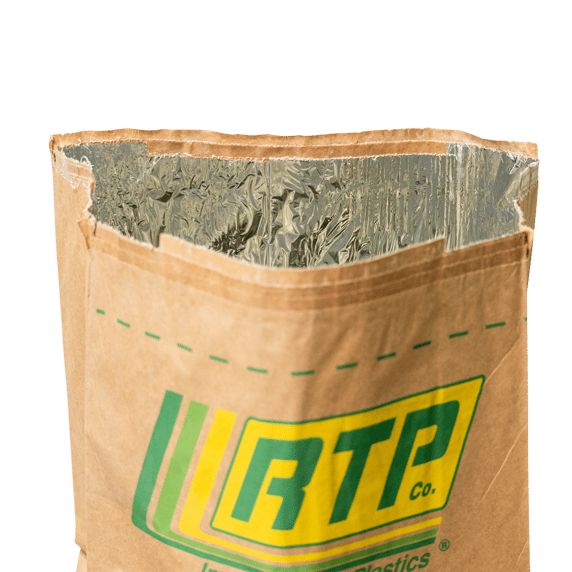
PBOM stands for Pinch Bottom Open Mouth — though you'll also see it written as Pasted Bottom Open Mouth (same bag, different terminology depending on the supplier). Either way, it describes the same core design: a multi-wall paper bag that arrives with the bottom already factory-sealed and the top open, ready to be filled with product.
The "pinch bottom" refers to how the bottom of the bag is closed during manufacturing — layers of paper are pinched together and bonded with adhesive before the bag ever reaches your facility. This pre-sealed base is what gives PBOM bags their substantial structural integrity compared to bags that are sewn or sealed after filling.
PBOM bags are designed to work with open-mouth filling equipment. Here's the basic sequence:
The result is a completely sealed package — airtight and sift-proof at both ends — with no stitching, no tape, and no loose threads. For food manufacturers, that last point matters more than it might seem.
Sewn-open-mouth (SOM) bags — the traditional alternative — are sealed at the top with a stitch after filling. That stitching creates small holes along the seam, which can allow fine powders to sift out and, more critically, allow moisture and external contaminants to enter. For food-grade ingredients where hygiene standards are non-negotiable, a stitchless heat-sealed closure is a meaningful upgrade.
Many dry food ingredients are hygroscopic — they absorb moisture from the surrounding air, which causes clumping, spoilage, and shortened shelf life. Flour, icing sugar, milk powder, and starch are all prime examples. A PBOM bag with the right inner liner creates a genuine moisture barrier that keeps product in spec from the packing line to the end user.
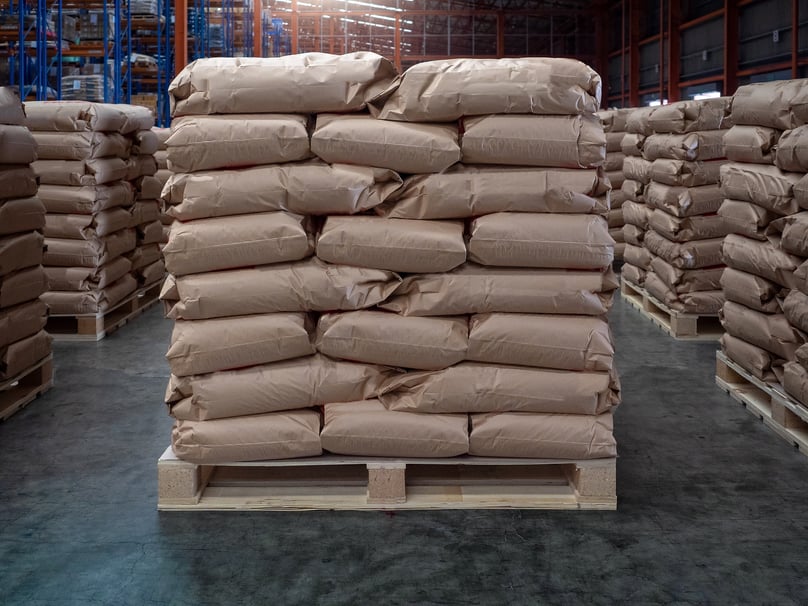
The factory-sealed pinch bottom creates a flat, stable base that stacks cleanly and holds its shape under load. For logistics-heavy supply chains moving pallets of 55 lb (25 kg) bags over long distances, that stability prevents damage, reduces returns, and makes warehouse handling significantly easier.
PBOM bags handle a wide range of bulk densities and flow characteristics, which is part of why they're so prevalent in food ingredient packaging. From fine powders like icing sugar to coarser materials like rolled oats or dried legumes, the same bag format can be adapted with different ply counts and liner options to suit the product.
PBOM bags are used across virtually every category of dry food ingredient:
Bakery and milling products — Flour, semolina, rice flour, gluten, baking powder, bread improvers, and cake mixes are among the most common applications. The moisture-sensitive nature of these products makes barrier protection essential.
Sugars and starches — Granulated sugar, icing sugar, raw cane sugar, corn starch, potato starch, and tapioca starch all ship in PBOM bags at commercial scale.
Dairy powders — Whole milk powder, skimmed milk powder, whey protein concentrate, and lactose require careful moisture management and are frequently packed in PBOM bags with LDPE or foil liners.
Spices, seasonings, and baking mixes — For aroma-sensitive products like ground spice blends, cocoa powder, or seasoning rubs, foil or Mylar inner liners preserve volatile aromatic compounds and prevent flavour migration.
Protein powders and nutritional blends — Whey isolates, plant-based proteins, collagen powders, and pre-blended nutritional formulas are increasingly packed in PBOM bags as manufacturers scale up from retail pouches to bulk B2B formats.
Coffee and cocoa — Ground coffee and cocoa powder benefit from foil-laminate liners that protect against oxygen, moisture, and light.
Dried legumes and grains — Lentils, chickpeas, rice, and oats are regularly packed in lighter PBOM configurations, often without inner liners, where moisture risk is lower.
Not all PBOM bags are created equal. For food ingredient applications, the construction choice has a direct impact on product protection, shelf life, and compliance.
Most food-grade PBOM bags use 3 to 6 plies of paper. A 3-ply bag is standard for lighter, lower-risk products; 5 or 6 plies are used for heavier fills (55 lb+ (25 kg+)) or products requiring additional puncture resistance. Each ply typically runs between 14–20 lb/3,000 ft² (70–100 g/m²).
Kraft paper is the traditional choice — strong, economical, and widely available. High-performance extensible paper (sometimes called HP or long-fiber paper) offers greater stretch and tear resistance, which matters for products that are rough on packaging during filling or palletization.
This is where the real food-safety decisions happen. Common inner liner and treatment options include:
Southern Packaging's PBOM bag assortment covers the full spectrum of these options — from straightforward LDPE-lined bags for flour and sugar to PE/Foil configurations for dairy and specialty ingredients — with capacities from 20 lbs to 100 lbs and 3- to 6-ply construction.
For food manufacturers, packaging compliance isn't optional. When evaluating PBOM bags for food ingredient use, check suppliers against the following:
FDA compliance — All paper and liner materials that contact food must comply with FDA 21 CFR regulations governing food-contact substances.
AIB International certification — Many food manufacturers require their packaging suppliers to hold AIB certification as evidence of Good Manufacturing Practice in the bag-making facility itself.
FSSC 22000 / BRC / IFS PAC Secure — GFSI-benchmarked food packaging standards. Increasingly required by major food retailers and manufacturers when auditing their packaging supply chain.
FSC or PEFC certification — Ensures the kraft paper is sourced from responsibly managed forests. Relevant for brands with sustainability commitments or retail-facing ESG reporting requirements.
ISO certification — ISO 9001 (quality management) and, where relevant, ISO 14001 (environmental management) are baseline expectations from most large buyers.
Asking to see current certificates — not just claims — before onboarding a supplier is standard practice, and any reputable PBOM bag manufacturer will provide them without hesitation.
|
PBOM |
Sewn Open Mouth (SOM) |
Valve Bag (PVSE) |
Webb Pinch |
|
|
Seal type |
Heat-sealed pinch top |
Stitched top after filling |
Pre-sealed; filled via valve |
Heat-sealed stepped top |
|
Food hygiene |
Excellent — no stitch holes |
Lower — stitch holes present |
Excellent |
Excellent |
|
Filling speed |
High |
High |
Very high |
High |
|
Self-standing? |
No |
No |
No |
Yes |
|
Best for |
Most dry food ingredients |
Grain, seed, feed (less critical hygiene) |
Fine powders, chemicals |
Retail-facing pallets |
|
Cost |
Mid-range |
Lower |
Higher |
Mid-to-high |
PBOM vs. SOM: The key trade-off is hygiene versus cost. SOM bags are typically cheaper, but the stitched closure is a real limitation for fine powders and moisture-sensitive products. For most food ingredients, PBOM's clean heat-sealed closure is worth the small additional cost.
PBOM vs. Valve bags: Valve bags (also called PVSE — Pasted Valve Stepped End) are filled through a small valve nozzle rather than an open top, making them extremely fast on the right equipment. They suit very fine, free-flowing powders particularly well. However, they're less flexible across varying bulk densities and require dedicated valve-filling machinery.
PBOM vs. Webb Pinch: The Webb Pinch is a self-standing variation with an SOS-style rectangular base. This makes it better for retail shelf presence and stacking stability. PBOM is typically preferred for bulk/industrial applications where shelf presentation isn't a factor.
Standard PBOM bags for food ingredients typically run from 5 kg to 50 kg fills, with 25 kg being the most common commercial format for B2B ingredient supply. In imperial terms, 50 lb bags are the US standard equivalent.
Bag dimensions vary accordingly:
Print and branding: PBOM bags can be custom printed with up to 10 colors using flexographic printing. Matte and gloss finishes are both available, and the large printable surface makes PBOM bags an effective branding vehicle for branded ingredient products or private-label options.
Lead times: Standard stock bags (plain or with existing print plates) typically ship within 2–5 working days. Custom-printed bags require 4–16 weeks, depending on complexity and whether new tooling is needed.
Paper bags have a significant sustainability advantage over plastic alternatives: kraft paper is renewable, biodegradable, and widely recyclable in standard paper waste streams.
The sustainability picture gets more complex with multi-layer bags, particularly those with PE liners or foil laminations. These bags are harder to separate and recycle through standard streams, though they may be compatible with specialist industrial recycling programs. If sustainability credentials are a priority, it's worth discussing mono-material or reduced-liner options with your supplier — though these will always involve a trade-off with barrier performance.
FSC and PEFC certifications, mentioned above, are the relevant benchmarks for responsible forest sourcing.
These terms describe the same bag style. "Pasted Bottom" emphasises the adhesive used to seal the bottom during manufacturing; "Pinch Bottom" describes the pinch-seal closure applied after filling. Different suppliers use different conventions, but the bag construction is essentially the same.
Ply count is determined by fill weight, product abrasiveness, and handling requirements. As a general rule: 3 plies for up to ~33 lb (15 kg) of non-abrasive product, 4–5 plies for 33–66 lb (15–30 kg), and 5–6 plies for heavy or abrasive products. Your bag supplier should provide a recommendation based on your specific product and fill weight.
Yes — PBOM bags require an open-mouth bag filling machine, which deposits product through a spout or nozzle into the open top of the bag before the pinch sealer closes it. Common equipment brands used with PBOM bags include Premier Tech, Hamer, and Fischbein. Confirm compatibility with your equipment supplier before switching bag formats.
Yes. Flexographic printing up to 10 colors is standard, with options for matte or gloss finishes. Some suppliers require a minimum order quantity for custom printed bags, typically 10,000 units or more, depending on the manufacturer.
Food-grade PBOM bags use materials that comply with FDA 21 CFR regulations for food contact. Always confirm this with your supplier and request certification documentation before use in a food production environment.
MOQs vary widely by supplier — from around 10,000 units for stock bag sizes to 50,000+ for custom dimensions or full print jobs. Some suppliers offer emergency stock programs for standard sizes with shorter lead times and lower minimum quantities.
PBOM bags provide a sift-proof, adaptable packaging solution for dry food ingredients, with specifications tailored to product type, fill weight, and supply chain demands.
If you're evaluating PBOM bags for food ingredient packaging, Southern Packaging's PBOM line covers the full spectrum of constructions with AIB, ISO, and FDA-compliant options and capacities from 20 lbs to 100 lbs. Request a quote or contact us today.

