

.svg)


UN Certified FIBC Bulk Bags
The safest, most reliable hazardous materials bulk bags in the industry from a supplier you can trust.
REQUEST A QUOTE
What is a UN Certified FIBC?
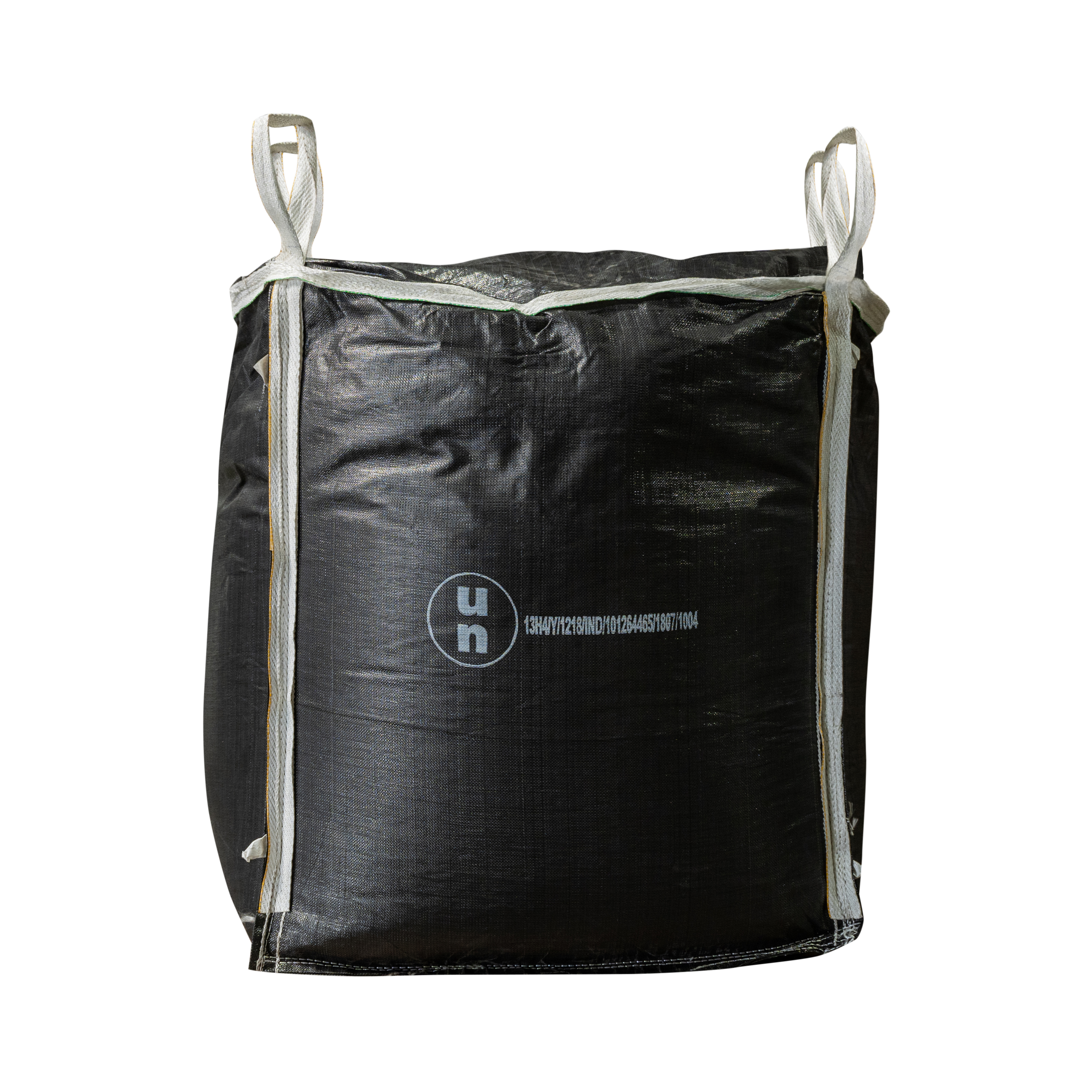
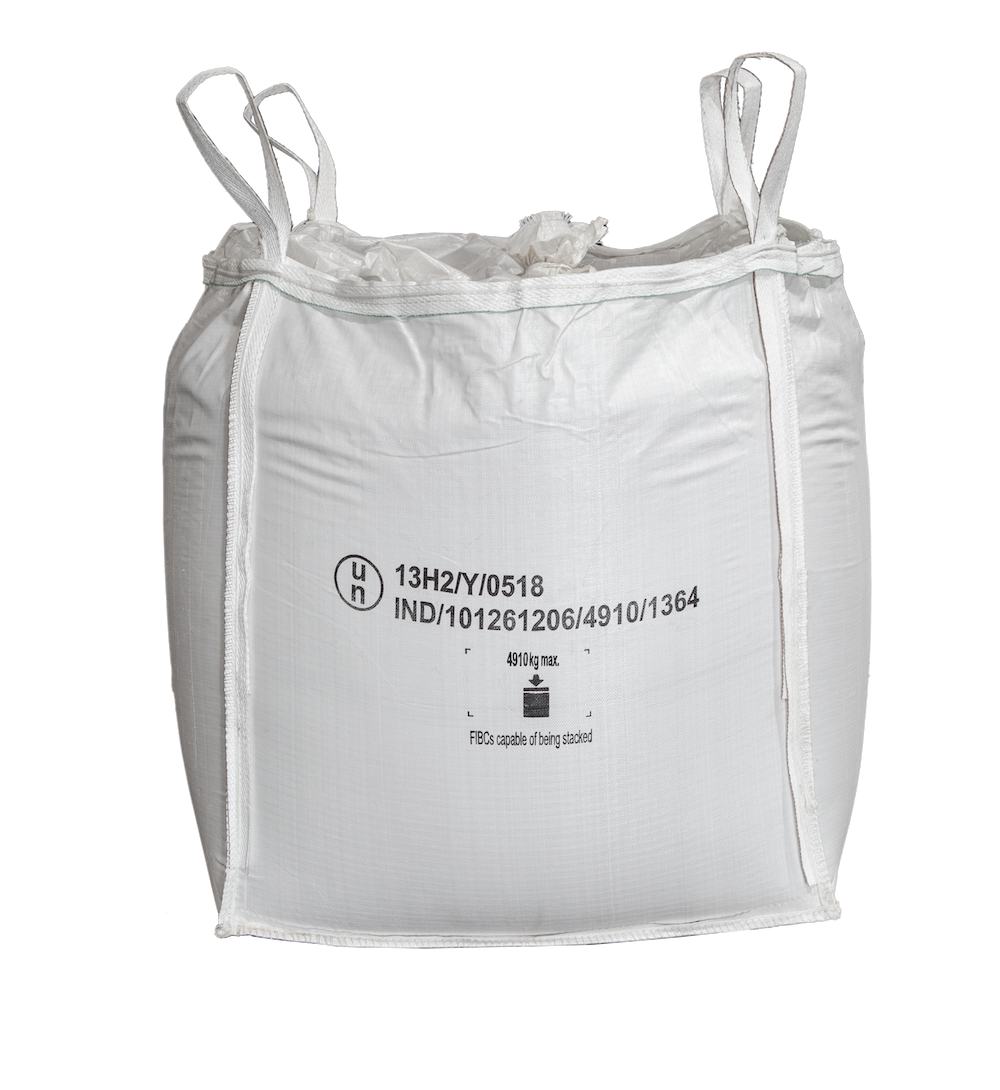
A UN Certified FIBC is a bulk bag designed and approved to transport and store hazardous materials under DOT and international shipping regulations. In order to qualify as a UN Certified bulk bag, the FIBC must pass rigorous UN testing standards. In addition, each UN rated bulk bag must adhere to strict labeling and marking requirements.
Employees who sell UN rated products must complete a UN packaging standards certification program.
UN Certified FIBCs are commonly used in industries handling hazardous chemicals, catalysts, flammable materials, and regulated waste streams. These applications require packaging that meets strict regulatory standards for safe transportation and storage.
Selecting a UN rated bulk bag ensures the packaging complies with required testing and marking protocols when transporting hazardous materials under applicable transportation regulations.

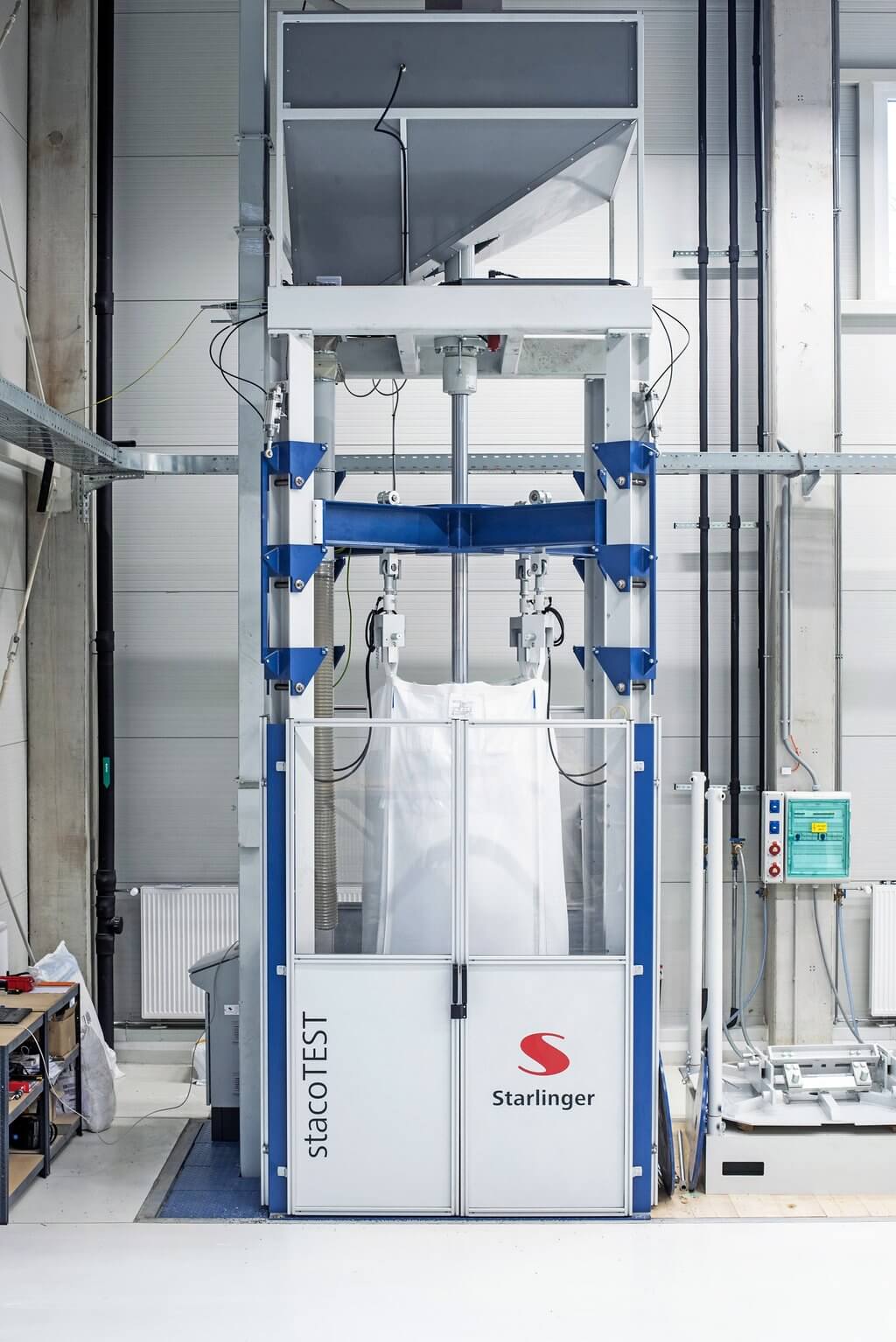
What Tests Must a UN Certified Bulk Bag Pass?
In order to receive certification as a UN rated package, the FIBC must undergo a series of performance tests. Bags must pass ALL of the following tests:
-
Top Lift – Bag is filled to maximum gross mass and lifted by its loops to verify the lifting mechanism holds under load.
-
Stacking – Filled bags are stacked to simulate warehouse and container storage conditions.
-
Drop – A filled bag is dropped from a specified height to simulate handling impacts during loading and unloading.
-
Topple – Bag is tipped onto its side to test seam strength and resistance to lateral impact.
-
Righting – A filled bag is laid on its side and returned upright to test fabric recovery without tearing.
-
Tear – A controlled cut is made to measure resistance to tear propagation under load.
Southern Packaging engages the services of TEN-E Packaging Services, Inc. to test our UN rated products.
What Features Should You Look for in a UN Certified Bulk Bag?
- Multiple Top Filling and Discharging Options
- A, B, C, and D Fabric Types
- Coated and Uncoated PP Fabric
- Factory installed PE or PP Liner
- High Heat Resistant Fabric
- Safe Working Load Range 500 – 3300lbs
- 6:1 Safety Factor
- Preprinted UN Markings
- UV Stabilized 1,600 Hours
- Produced in ISO and BRCGS Certified Facilities
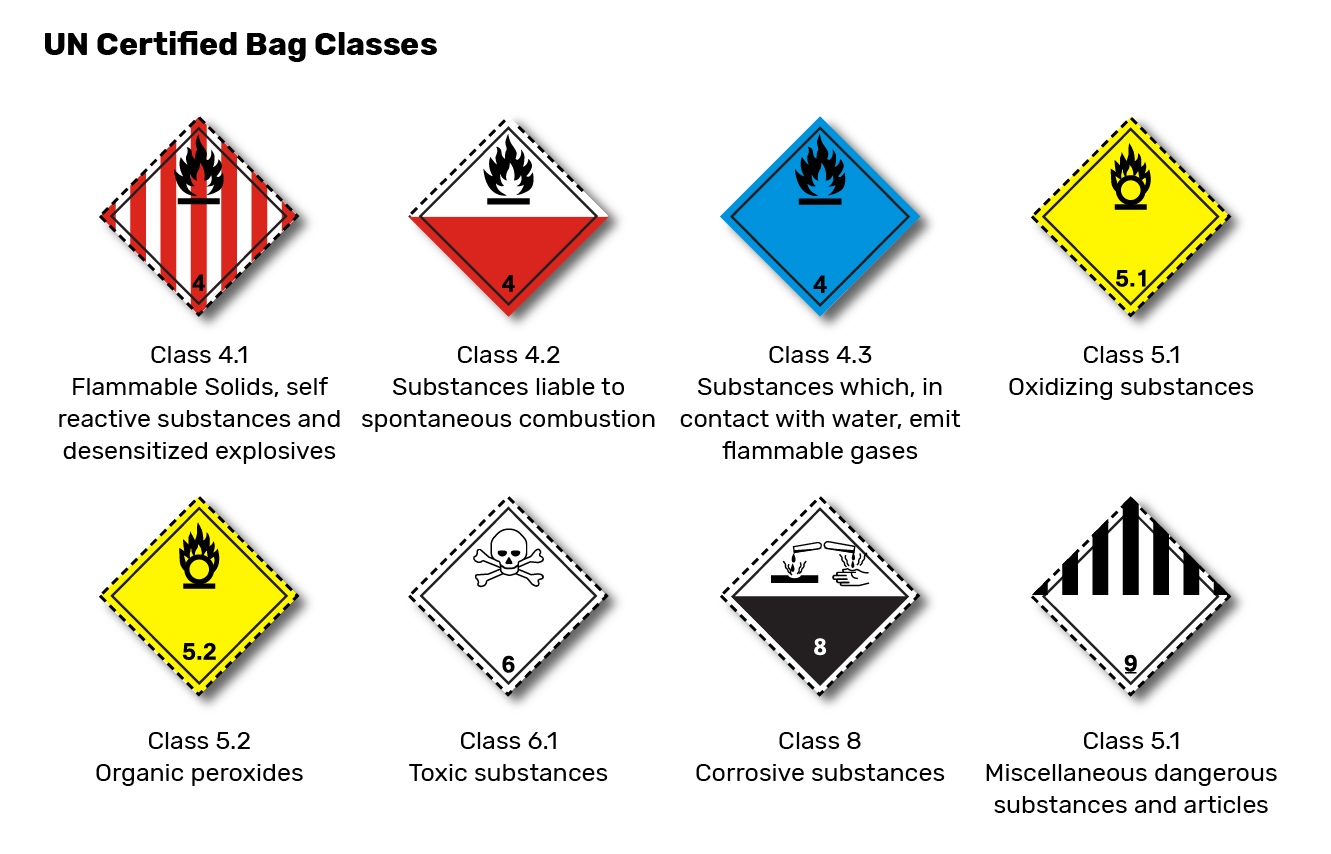
What Hazardous Materials Can Be Shipped in UN Certified FIBCs?
UN certified FIBCs are approved to transport a wide range of regulated hazardous materials across multiple DOT hazard classes, including:
- Catalyst
- ANFO
- Explosives
- Guar
- Asbestos
- Toxic Waste
- Corrosives
- Flammable Solids
- Radioactive Waste
Are UN Certified FIBCs Required by Law?
Yes - the U.S. Department of Transportation (DOT) requires UN specification packaging for most hazardous material shipments under 49 CFR Parts 171–180. Manufacturers select UN Certified FIBCs when regulatory compliance is required for the safe transportation of hazardous materials. In many cases, the use of UN rated packaging is mandated by the Department of Transportation (DoT) and other governing authorities.
Using a properly tested and labeled UN bulk bag helps ensure compliance with transportation regulations while maintaining safety throughout the supply chain.

How Do You Choose the Right UN Certified FIBC?
Selecting the right UN certified FIBC depends on three factors: your material’s hazard class and packing group, any static-discharge requirements, and your fill/discharge process.
-
Hazard class and packing group – Identify your material’s DOT hazard class and packing group (I, II, or III). Choose packaging with the corresponding X, Y, or Z rating.
-
Static sensitivity – For flammable or combustible materials, select a Type C (conductive) or Type D (anti-static) FIBC to prevent ignition from static discharge. [Link to /fibcs/type-c-bulk-bags and /fibcs/type-d-bulk-bags]
-
Moisture exposure – For moisture-sensitive materials, choose a coated bag (13H2 or 13H4) or one with a factory-installed PE or PP liner (13H3 or 13H4).
-
Fill and discharge method – Match the bag’s top fill and bottom discharge configuration to your equipment and process workflow.
Our team can help you match the right bag to your specific material, volume, and shipping requirements - request a consultation or quote.
REQUEST A QUOTE-1.png?width=160&height=160&name=Rectangle%2010%20(1)-1.png)
.png?width=160&height=160&name=Rectangle%2014%20(1).png)